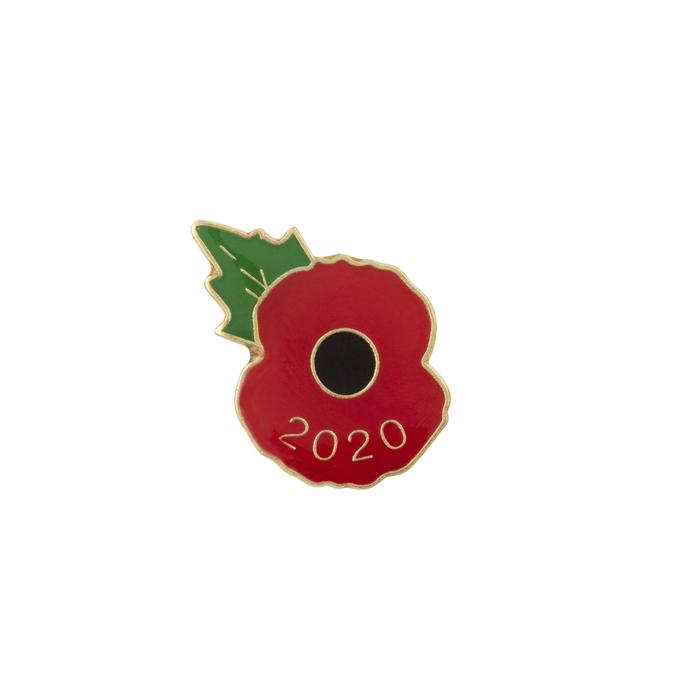
I am out of the closet (or should that be the crypt?) as a self-proclaimed taphophile. Graveyards have long held a fascination for me and many hours over my fifty plus years have been spent in cemeteries both here in the United Kingdom and across Europe.

On occasion, on my forays into these tranquil spaces, a particular grave will pique my curiosity. This may be for a variety of reasons, an association with local history, an intriguing epitaph or a family connection.... it doesn't take much. The online availability of censuses, official registries and newspaper archives have in recent years made it possible to learn something more about the lives lived by those remembered only as fading names carved in stone. These resources provide an opportunity to put 'flesh on old bones' as the turn of phrase goes, hence the title of this blog 'Beyond the Grave'.

If anyone reading these posts has anything to add please feel free to contact me at adrianandrews@myyahoo.com.

Showing posts with label World War 1. Show all posts

Saturday, 9 May 2026

Cambridge War Memorial (Hills Road, Cambridge May 2026)


'The Homecoming'
Hills Road, Cambridge.

At 11am on 11th November 1918 the guns on the Western Front fell silent marking the end of what was to become known as The Great War (sadly before history deemed it necessary to rename it as World War One). For the nation, when the killing stopped, remembrance began. This presented a huge challenge to a country whose coffers had been hugely depleted by four years of fighting on a hitherto unprecedented scale. Against this financial reality was the fact that every community from hamlet to metropolis, understandably, wanted the loss of a husband, son, brother or sweetheart to be commemorated in perpetuity in the areas in which they lived.

The UK National Inventory of War Memorials (based at the Imperial War Museum) has since 1989 been recording memorials and as of 2007, upwards of 60,000 had been documented. This figure rose to around 70,000 with increased interest and activity that came with the commemoration in 1914 of the centenary of the start of ‘The Great War’. The majority of these 70,000 memorials remember the fallen of 1914-1918 (sometimes 1914-1919) and may are supplemented with the addition of the names of those lost in the Second World War (1939 to 1945 of course). You don’t have to be so eagle-eyed to spot them for they are pretty much everywhere around us, in parks, railway stations, council offices, churches and on traffic islands.

Most memorials were funded in large part through contributions from relatives and organised fund raising activities. The local nature of the funding and planning of these memorials resulted in a wonderful variety in terms of scale, design and complexity (in sharp contrast to the uniformity of the memorials under the responsibility of the CWGC for example).

Of course, it goes without saying that the poignancy of these war memorials is the same, from the most simple and humble to the most ornate and grand. However, amongst this vast array of monuments, my favourites (if favourite is an appropriate word to be applied to a war memorial) are those that incorporate sculpture, especially those depicting soldiers (or in some cases animals).

One such, and the subject of this post, is the principal Great War memorial in the City of Cambridge. Located to the south of the city centre at the intersection of Hills Road and Station Road (and relocated within the same area in 2012 to its present site in front of the entrance to the Cambridge University Botanical Gardens. I have walked past this memorial countless times and whilst I have not ignored it (I have always greatly admired it) I haven’t paid close enough attention to the detail of the work. This is in great part due to the fact that for much of the time when I was viewing it, it stood stranded on a traffic island on a busy junction, a position that never encouraged close inspection.

Spending ten minutes with the memorial last week it became apparent that I had misinterpreted the sculpture in all of the years that I had been looking upon it. And my mistake was quite fundamental.

The face of the soldier depicted on top of the plinth is that of a fresh-faced youth, someone in their late teens or early twenties. I assumed that this was a reflection of Cambridge as a university town. There is also attitude of the sculpture. The subject has an over-exaggerated stride expressing great purpose whilst the young soldier glances back over his right shoulder, intimating something that is being left behind. He is bare headed carrying his helmet almost jauntily in his right hand. For years, the detail that I took in lead me to the assumption that this was a representation of a Cambridgeshire youth heading off to war in 1914. At that time thousands of young men saw the opportunity to participate in a war as an offer of adventure and excitement. It was a chance for a time at least to escape the drudgery of the factory, office or perhaps even the college library. Buoyed up by jingoistic speeches by politicians as well as by the patriotic recruiting tunes spilling out of theatres, men and boys took the King’s shilling with great enthusiasm and indeed headed to our ports with a spring in their step.

How wrong could I be?

The memorial carries the name of ‘The Homecoming’. As such, clearly the soldier is returning from the war victorious. Suspended from his rifle which is sloped over his left shoulder is a laurel wreath, a representation of triumph in both Ancient Greece and Rome, the wreath in turn rests upon a German steel helmet, a souvenir brought back from the trenches. In addition he clutches a rose in his left hand, an offering of thanks from a bystander in the homecoming parade one can assume.


I will say this (before a more knowledgeable aficionado on all things Great War than myself points it out!), the clincher to whether this was a depiction of Tommy off to war (1914) or returning from the trenches (1918) lies in the fact that he is clutching a steel helmet of a design that was only introduced to British troops in the Summer of 1915, thus ruling out a 1914 setting for the Cambridge War Memorial statue.

The ‘Homecoming’ statue was the creation of the Canadian sculptor,  Robert Tait McKenzie, who as well as being an artist was a physician and surgeon, skills which let him in 1915 to travel to England to enlist in the Royal Army Medical Corps.

I was partially correct in stating that the soldier shown in the uniform of the Cambridgeshire Regiment was intended to be representative of many of the young Cambridge University undergraduates who interrupted their studies in order to go and fight. The face of the statue has a name, for it is the face of a real person selected by the artist. He was Kenneth Hamilton, and undergraduate of Christ’s College who was reading English in 1921. A photograph of a clay study of the statue/Kenneth’s head is held by the Museum of Cambridge.

Study of the soldiers head in clay based on Christ's College undergraduate Kenneth Hamilton.

The monument was unveiled by the Duke of York (later to become Kind George VI) at a ceremony held at 3pm on 22nd July 1922. At that time, the bronze was not yet finished so a gilded plaster cast filled in  on the day. A dedication ceremony was held later on 3rd July 1923.

Part of the Order of Service for the unveiling on 22nd July 1922.

The inscription on the plinth reads:

"TO THE MEN OF CAMBRIDGESHIRE
AND THE ISLE OF ELY, THE BOROUGH
AND UNIVERSITY OF CAMBRIDGE
WHO SERVED IN THE GREAT WAR
1914–1919"

to which was later added

"AND IN THE WORLD WAR / 1939–1945"

'The Homecoming' in its original position in 1923.

For me the statue, stunning as it is,  says a lot about the national viewpoint on the war as it was in the early 1920s. So close to the end of hostilities the prevailing attitude was that the fallen had sacrificed their lives heroically for King and Country (which was true) and that they had died glorious deaths (which is an attitude that has since been challenged, especially in the context of the First World War). The notion of a glorious death on the battlefield conjures up images of cavalry charges with swords drawn or close quarters skirmishing… real "Don't fire until you see the whites of their eyes" stuff. In a truly mechanised war as was the case from as early as 1915, death was commonly delivered anonymously by artillery batteries separated by miles or by unseen machine guns. This crucial difference however was not a topic of discussion or debate in the aftermath of the war. For many years, veterans refrained from talking about the horrors that they had been witness to, either because they couldn’t or, as was often the case, wouldn’t since anyone who had not experienced the trenches first hand hadn't the capacity to comprehend the reality of such warfare. It was only really by the time that the 50th anniversary of the outbreak came around that historians and veterans really started shaping our understanding of the war (and the war as it was fought on the Western Front in particular) into what it is today. Families of fallen soldiers were not equipped with such knowledge at the time when this and thousands of other such memorials were erected and dedicated. And it is probably a good thing that this was so.

I have read many personal accounts of the wartime experiences of soldiers that include photographs taken before and after the war and it is not unusual to see the face of a boy staring out at you from the page at say 20 only to be transformed on the next page into the face of a 40 year old after four years of fighting. McKenzie well understood the facial changes brought on by stresses and strain. Prior to the war, he cast bronzes entitled ‘Violent Effort’, ‘Breathlessness’, ‘Fatigue’ and ‘Exhaustion’ reflecting the facial expressions of athletes at the end of their endeavours and post war he was involved in the therapy and treatment of soldier’s damaged both mentally and physically by the war. But, I guess in 1922, Cambridge was not yet really for such realism in a memorial.

The person looking at and reflecting upon statue of the soldier in ‘The Homecoming’ memorial must therefore in part view it through 1922 eyes in order to properly understand it.  Here is the description of the work in the sculptor’s own words:

‘The statue shows a private soldier in full kit on his triumphal return after the War. With discipline relaxed, he is striding along bare-headed, helmet in hand, a German helmet as a trophy slung on his back and partly concealed by a laurel wreath, carelessly flung over the rifle barrel. In his hand he holds a rose. Another rose thrown to him has fallen to the ground. His head is turned to the side, his expression is alert, happy and slightly quizzical, and his lips are slightly parted as if he has recognised an old friend in the welcoming crowd and is about to call upon him. In this face I have tried to express the type on whom the future of England must depend.’

The artist clearly intended his work to be optimistic and representational of a new bright future for the country after the fighting was done.

I still love it!


Tuesday, 21 February 2023

Remembering Private 29387 Fred Brisco 1st Battalion Lancashire Fusiliers


Extract from the 'Leigh Journal' reporting the death of local volunteer Private Fred Brisco.

It was a different sort of pilgrimage that took us to the town of Leigh on a Saturday morning last December. Leigh forms part of the Metropolitan Borough of Wigan and was the birthplace of the musician who went by the name of Pete Shelley. His band, Buzzcocks, were a major player in the UK punk scene of the late 1970s. Following Pete's premature passing four years ago, family and friends funded a mural of him on the gable end of a property close to the Town Hall. We came, we saw, we took pictures. Since the bus journey to Leigh from central Manchester is quite a trek we decided also to take the time to also view the small museum located within the Town Hall. 

Now if you find yourself in Leigh, to say 'Hi' to Pete or whatever, I would recommend you to spend 20 minutes within the museum. It has such a warm sense of civic pride and it was a pleasure to view the panels and exhibits that describe the proud industrial past upon which Wigan and Leigh grew.

Not far from an area dedicated to Pete and his band I spied a cross.... that's always going to turn my head. It was clear that this corner of the museum was intended, by way of one individual, to commemorate the huge sacrifices that the men and boys of the many Lancashire Regiments made during The Great War. 

The exhibit consisted of a reproduction of the piece that appeared in the local newspaper that reported the fact that Private 29387 Fred Brisco had been killed in action on 1st July 1916, a date seared into the minds of the British for more than a century... truly the 'blackest day in British military history'. It was the opening day of what became known as The Battle of the Somme, a British offensive that together with the efforts of the French fighting to the south would finally break the German lines and bring the war to a swift conclusion, or so it was believed. Only it wasn't decisive at all and the fighting ground on until November with very little achieved. But of 1st July 1916, it was a day that goes down in infamy as British losses were close to 60,000, killed, wounded or missing. Amongst the casualties were thousands of young men that formed Kitchener's Army, volunteers that in most cases had not been in France for more than a few weeks. Fred arrived in France just a month before the battle. The second exhibit was the makeshift cross made to mark his grave. When a permanent headstone to his memory was erected in Auchonvillers Military Cemetery, at the families request, the wooden cross was sent back to Leigh.


The cross is simply carved, bearing the words:

'In Memory Of
Pte 29387 Fred Brisco
Killed In Action
1st July 1916'

On that fateful day thousands of individual tragedies were played out across the battle's 25 mile front. Fred as a soldier of the 1st Battalion Lancashire Fusiliers was to be engaged in one of the better known engagements that took place on 1st July. The fighting that took place in the area in front of the village of Beaumont Hamel carries all of the hallmarks what 'The Somme' has come to mean in the intervening years. A lack of understanding of the enemy positions and their ability to endure the most ferocious and prolonged artillery bombardment, the effectiveness of the shelling in fragmenting the thickets of barbed wire that protected the front line and of course the resultant slaughter of thousands of men. 

1st Battalion Lancashire Fusiliers formed part of 86th Brigade of the 29th Division. The objective of the 1st Battalion on the morning of 1st July was the fortified village of Beaumont Hamel a small cluster of buildings around a church. Whilst the settlement was/is nothing to write home about, it occupies higher ground on one side of the Beaumont Hamel valley. For this reason the village was heavily fortified.


On the map above the section of the front line occupied by the 1st Lancashire Fusiliers ('1/LF') can be seen in red at the top. The 16th Battalion Middlesex Regiment and the 2nd Battalion Royal Fusiliers were located on the Lancashire Fusiliers right flank, facing the Hawthorne Redoubt. On the map, the British front line is marked in red with the German front line in green, forward of the village. No Man's Land separated the two lines. On the Lancashire front, between the opposing lines there can be seen a geographical feature that was to play a significant part in the day's fighting. Circled in blue on the map, this was known as the 'Sunken Road' (or 'Sunken Lane' in some accounts) and was a medieval banked track. This otherwise unremarkable track is also the location of some of the most famous images from the Western Front, but I will come back to that shortly. 

On the eve of 'Big Pushes' those at the top of the military hierarchy would visit the troops destined to go over the top to deliver speeches intended to remind the men of their duties to King and Country and to uphold the fighting traditions of their respective regiments.

One such speech was delivered to the men of 1st Battalion Lancashire Fusiliers by G.O.C. of the 29th Division, General Sir Henry de Beauvoir De Lisle.

General Sir Henry de Beauvoir De Lisle addressing the soldiers of the 1st Battalion Lancashire Fusiliers ahead of the assault on Beaumont Hamel.

'I cannot allow the battalion of which I am so proud to enter this great battle without coming to wish you good luck, and to give you the general situation.

We are now taking part in the greatest battle in which British troops have ever fought. At this great time all the previous engagements during this and former wars sink into insignificance. The forces that are engaged in this Fourth Army are five times as large as the whole of the original Expeditionary Force. We came out in August, 1914, with 4 Divisions, and here we have 21 Divisions.

All that military thought and science can do to make this a great success, has been done. For the first time, we have got into place as many guns as we can, and with unlimited ammunition. In this Corps alone we have just short of 600 guns. I say ammunition is unlimited. Dumped by the side of each gun is 1,000 rounds, and what they expend during the day is made up at night. We are firing away 40,000 tons of artillery ammunition; in other words, one and a half million rounds. In this Corps alone, if all the ammunition were placed in lorries they would occupy 46 miles of road.

Now, the importance of this battle cannot be exaggerated. On the eastern theatre the Russians have had a great success. They have already captured 200,000 of the enemy as prisoners. Our Allies in the West have destroyed thousands of the enemy, and now we hear that the Italians are moving forward. Now, this is the chance for British troops to show that they too, can be successful.

As you go into this great battle I want you to remember what you are fighting for. You are not only fighting to add to the glories won by past generations of the Lancashire Fusiliers. You are not only fighting to maintain the honour of the 29th Division which won its laurels on the Gallipoli Peninsula. You are fighting for your country. More than that, you are fighting for humanity. We are fighting against oppression; fighting for truth, honour and justice. We are fighting against slavery for liberty, and we are going on fighting until we have gained our object.

I would like to tell you that if we are successful during the next week, we hope to gain that object before the winter. Much depends on success, and our higher Commanders know - and I know - that all their arrangements cannot win victory. Victory must be won by the infantry, and only by the infantry.

Officers and men: Of all the battalions I have in this Division, you give me the greatest confidence of any. To you has been set the most difficult task - that of breaking the hardest part of the enemy's shell, and I expect you to break that shell in the German first system of trenches.

Officers and men: I wish you the best of luck, and I leave you with the highest confidence, that what any man could do, you will do, for your country.'

Rather than describe the events of the day, I have reproduced the official account of the fighting as it appears in the Battalion's War Diary. Written just hours after the events that are described occurred, the contemporary description of the action I think conveys something of the confusion and horror that is lost in secondary accounts.

All I need to say is that the preparations for the assault started as 3 am when soldiers of the Battalion passed through a tunnel that ran out into No Man's Land from the British Front line trench. This tunnel lead into a communication trench that ran into 'Sunken Road'.

The war diary account that follows picked up the events from 7 am on the morning of 1st July:

'Account of action 1st July 1916
Attack of 1st Lancashire Fus on BEAUMONT HAMEL.

At 7 am Battn H.Q. moved from White City to Sunken Road and at the same time the enemy began to shell the Sunken Road with 77 cm guns and inflicted about 20 casualties. They had probably spotted the communication trench leading from the end of the tunnel into the road.

0720. The mine under HAWTHORNE REDOUBT was fired and although it was not visible from the road, all felt the ground shake. B & D Coys (Companies) were lining up in position for the assault. D Coy had to be careful not to expose themselves as the Northern end of Sunken Road is shallow, and B Coy had to carefully select their exits, as the bank is overhung & lined with trees at the Southern end. 86th Stokes gun battery opened hurricane bombardment on German first line. 

0730. The leading sections of B, D and bombing Company dashed forward in extended order, D Coy being led by 2 Lts CRAIG, GORFUNKLE & SPENCER, B Coy by 2 Lts PRESCOTT, EDWARDS & KERSHAW. At the same moment 1 platoon B Coy under Lt WHITTAM & 2 platoons bombers left our trenches S of BEAUMONT road. A Coy began to leave front line trenches in support of B & D Coys.

The leading 2 lines of B & D Coys had a few moments grace and then enemy M.G. (machine gun) opened & a storm of bullets met the attack. The third and fourth lines of B & D Coys were practically wiped out within a few yards of Sunken Road though some wounded, including Caps NUNNELLY & WELLS the two Company Commanders managed to crawl back.

‘A’ Coy had also suffered in their advance to Sunken Road, the three subalterns all being hit & many men. Capt MATHEY reached the road and dashed on with the men who entered the Northern End.

C Coy caught the M.G. fire as soon as they left the trenches. Capt DAWSON and C.S.M. NELSON being hit on the parapet, when giving orders to Coy to advance. 2 Lt CASEBY and about 60 OR (other Ranks) reached the Sunken Road, but one platoon under Lt Jones got blocked in the Communication trench by wounded.

The bank into the Sunken Road is a steep drop of about 15 feet & men encumbered with coils of wire , mauls etc rolled down this to the bottom.

There now ensued some delay whilst C Coy & remainder of A Coy who had entered down steep bank were collected & sorted from the 100 wounded who had by now collected in Sunken Road, preparatory to further advance.

Sgt CAULFIELD a Lewis gunner had located a M.G. behind some debris in the village, and he pointed this out to CO. Two Lewis guns were established towards it. Planned to put it out of action, but the German artillery and observation was very quick and they were immediately shelled by 77 cm guns & 1 gun was hit, still the M.G. ceased firing from that position.

It took nearly half an hour organizing the further advance & at 0815 the CO ordered the Stokes guns to open a rapid burst under cover of which 2 Lt Caseby led forward about 75 OR who had been collected.

This reinforcement was launched from the N end of the road to try & gain a footing towards Northern end of the village, where the ground is higher.

All ranks dashed forward bravely, but on topping the crest, just 10 yards from the Sunken Road, they were met by the same heavy M.G. fire & only Lt Caseby and about 10 OR reached the German wire.

It was now 0830, and no reports had come from the front, & it was not possible to see from the Sunken Road what was happening on the flanks, so CO returned to our trenches to get news there.

Major UTTERSON reported that besides the 10% reinforcements, who were holding front line system there were about 30 men, who had not gone over the top owing to being blocked by wounded. These were collected.

Very little movement could be seen in the German lines & the village was certainly not occupied by our troops & fire had died down. Around HAWTHORNE REDOUBT about 25 Germans under an officer could be seen working round the crater. One of our M.G.s opened on them, but had to cease almost at once as enemy artillery blew in the parapet by them in under 3 minutes.

Returning to the Sunken Road there was nothing to be done, as we had no reinforcements. At about 0945 there was a sudden retirement on our right or Southern flank, presumably Royal Fus & Middlesexs. Everyone thought for the moment the Germans were counterattacking, (illegible) seemed to more possible from our point of view. We had over 100 wounded in the Sunken Road & they tried to make a rush for the tunnel. This was soon quelled & about 50 fit men were made to line the bank at either end. 25 under Sgt Green began digging at the Southern end & making a barricade & about 35 did the same at the Northern end. 

11.45. Time passed & at 1145 GS43 from GOC 86th Battn was received. GM17/1 sent in reply*. There was no time to receive an answer to GM17/1 & orders were given to Major UTTERSON that at 1230 he was to advance with his 25 men with all that was available in our front trenches, exclusive of the 10% who were not under our orders.

The remaining men in Sunken Road were got ready to advance, if Major Utterson’s reinforcements reached the road.

Although there was no chance of achieving anything on our own front, there were about 700 men in our trenches opposite the Hawthorne Redoubt, & to help them it seemed necessary to attract as much M.G. fire as possible on ourselves.

Unfortunately only Major Utterson and 4 OR reached the road, and the troops on our right never moved, so our sacrifice was in vain. Still it showed us that the enemy still held the village and that his M.G.s were intact. 

There was now nothing to be done except to hold on to the Sunken Road.

Further steps were taken to improve entrenchments already begun, & the wounded who could move by themselves were allowed to crawl back to White City via the tunnel.

1 pm. Received BM & reply CM15/1.
1.50 pm. CM16/1 despatched.
2.10pm Capt FULTON (attached to Brigade Staff) arrived and talked over situation & informed me that Sunken Road must be held at all costs.

Nothing else changed the situation for the remainder of the day, except the German shells which dropped into Sunken Road caused a few more casualties, & the Germans sniped and killed a load more of our wounded whenever they moved or tried to put on their field dressings.

At 6 pm remainder of men except 1 officer and 25 withdrew from Sunken Road , that night all available stretcher bearers and men searched the field for wounded.

The day had cost the battalion many valuable lives. Casualties were 7 officers killed, 14 wounded & 500 ORs. The battalion fought well, but the enemy was ready for us & had plenty of M.G.s & against them no troops with a strength of only 1 ½ men per yard can hope for success.'

* Messages stating that the Sunken Road must be held at all costs.

So there you have the story of the 1st Battalion Lancashire Fusiliers in front of Beaumont Hamel, one of the British units more or less annihilated on that 'blackest day in British military history'. Post battle, more accurate casualty figures were established, the widely accepted numbers being 165 killed, 312 wounded and 11 missing presumed dead.

Private 29387 Fred Brisco aged 21 years was one of the 165 fatalities. His headstone in Auchonvillers Military Cemetery bears the inscription 'HE NOBLY ANSWERED DUTY'S CALL HE GAVE HIS LIFE FOR US AND ALL'.

Presenting this information, so intimately connected with the death of Private Fred Brisco in the form of contemporary records prepared only a day or so either side of the 1st July 1916, does I feel strip away much of the tragic romanticism that has become part and parcel of the Somme story over the intervening decades. These are the facts, unencumbered by the analysis of the battle and its extraordinary aftermath. I think that the account is all the more shocking for that.

I mentioned that the battle would be the location of some of the most well known images of the war. 

Geoffrey Malins of the Gaumont British Picture Corporation and John McDowell of British & Colonial Films were sent by the British Topical Committee for War Films to record a documentary of the activities of British troops on the Western Front. Some of the footage was shot between the 26th June and 7th – 9th July and as such captured some of the preparation for and the opening of the Somme offensive. Malins captured the men of the 1st Battalion Lancashire Fusiliers in the Sunken Road just prior to the start of the attack.

Still image from Geoffrey Malin's footage showing the men of 1st Battalion Lancashire Fusiliers at around 0700 on 1st July 1916 ahead of 'going over the top'.

In contrast here's a photograph of the lane that I took about 20 years ago.


Malin's also witnessed the detonation of the mine under the Hawthorne Reboubt, a fortified German stronghold, mentioned in the account of the battle.


And this is a view into the creator in the early 2000's.


Malin's footage was used in the newsreel presentation 'The Battle of The Somme' which when shown in the UK in August 1916 attracted an audience of 20 million. This film marked the beginning of a new chapter in war reporting.

This photograph depicts a view towards the German lines from the British position in the Sunken Road (itself in the middle of No Man's Land). The wooded area centre left is Beaucourt Ridge where another German stronghold, The Berkwerk, was located. Machine guns from this area took many casualties. The spire of Beaumont Hamel Church can be seen on the right of the picture. Piognantly, in the centre of the photograph about half way between the Sunken Road and the Beaucourt Ridge the portland stone topped brick entrance pillars of Beaumont Hamel British Cemetery are just visible. A number of Lancashire Fusiliers and Middlesexes are buried here. This is as far as they got.


Wednesday, 11 November 2020

Remembering Private Bertie Osborne 19670 1st Dorsetshire Regiment


Castle Gardens War Memorial
Bishops Stortford, Hertfordshire
November 2020

Detail from the Castle Gardens War Memorial

Some months ago, it was brought to my attention that two identical names appear on Bishops Stortford’s main War Memorial in Castle Gardens. Whilst given the huge numbers of men who fell in the Great War, duplication of names on our monuments is to be expected, where this happens it is more common to see differentiation by inclusion of middle initials. The soldiers in question appear together on the same panel of the memorial as OSBORNE Bertie. Lance Corporal Bertie Osborne of the 1st Battalion, Princess Victoria's (Royal Irish Fusiliers) died after the cessation of hostilities on the 27th November 2018 after contracting pneumonia as a Prisoner of War. He lies in Charmes Military Cemetery, Vosges, France. It is his namesake, Private Bertie Osborne 19670 of 1st Battalion Dorsetshire Regiment, who is the subject of this post.


Bertie was a resident of the New Town Area of Bishops Stortford in Herfordshire. As its name suggests, New Town was a largely Victorian expansion on the high ground to the south of the old market town. Many of the soldiers who appear on the town’s Roll of Honour lived in the close knit streets of the New Town area. In the 1911 census the family could be found residing at 12 Middle Row. Bertie, then a 23 year old farm labourer, lived with his Mother and Father, John and Mary Ann and brother John Frederick. Middle Way can be seen from my front window. In the present day it is much changed following the construction of the Oak Street sheltered housing development and most of the houses that could be seen at the turn of the last century are long gone.


Bertie enlisted with the Bedfordshire Regiment but was transferred to the 1st Battalion Dorsetshire Regiment with whom he was serving at the time that he was killed.

In August 1918 the tide of the war was turning in the Allies favour. The German Spring Offensive or ‘The Kaiser’s Battle’, a last ditch effort to smash through the Allied lines on the Western Front, before full deployment of the newly arriving US forces, had faltered. The Germans fell back to positions of defence, their morale battered with the realisation that a turning point in the war had been reached. Conversely, the Allies morale was greatly buoyed as all territory lost in the Spring Offensive was now retaken.

The beginning of August 1918 saw the 1st Dorsets as a fighting unit of 14th Brigade of the 32nd Division attached to the Canadian Corps of the 4th Army. The Dorsets were to participate in the Battle of Amiens, a concerted effort of British, Australian, Canadian and French forces, that was a prelude to what became known as the ‘One Hundred Day Offensive’, a series of actions that brought about a continued Allied advance and an end to The Great War. 

In the first week of August the 1st Dorsets came out of the Battalion Army Reserve in Belgium and moved to the Amiens area, taking up a front line position on the ridge at Le Quesnoy in front of the village of Damery, approximately 35 kilometers to the South East of the city. Orders were received for the second phase of the battle in which the Dorsets were to have an active role, Phase I having commenced on 8th August. All four Companies of the Battalion were to be in the line for the action that was to commence at Zero hour 0920 on the morning of the 11th:

· “D” Company was ordered to assemble in the British Front Line and capture the Bois Damery.

The remaining three Companies were ordered to assemble behind the ridge at Le Quesnoy.

· “C” Company were ordered to attack Damery Villagefrontally.
· “A” Company were ordered to attack from the North west.
· “B” Company were ordered to push through Bois Milieu (also known and visible on map below as              Payen Wood) and establish communication with 5/6th Royal Scots in the wood.

Contemporary Military Map showing the positions of Damery, Bios Sud (South Wood), Bois Milieu (Payen Wood) and Parvillers


The plan was that on the left flank of the Brigade front the 5/6th Royal Scots would attack the village of Parvillers and in so doing join up with “B” Company of the 1st Dorsets. On the Brigade right flank lay the 4th Army boundary with the French 126th Division. 14th Bridage's third battalion, the 15th Highland Light Infantry (H.L.I.) were held in reserve for the initial stages of the attack. Like the Dorsets, the Royal Scots also had all four Companies in the line.

At 0920, Company Commanders were informed of their respective objectives by the Commanding Officer of the Battalion, Lieutenant Colonel H.D. Thwaytes. The barrage heralding the start of the assault began its terrible roar at 0930 hours as men poured over the parapet.

No sooner had the first man gone over the top, the Dorsets were hit by very heavy machine gun fire coming from the direction of Parvillers. There was no creeping barrage behind which the Brigade could advance nor were the guns accurately ranged on the German front line, rather the hastily drawn up fire plan had the guns ranged at 500 yards ahead of the infantry and as such the German gunners were unaffected by the shells that fell a comfortable distance to their rear. Likewise, an anti-tank gun hidden and unmolested in a cornfield was able to account for six of the eight tanks available to support the Brigade attack.

“D” Company (Objective Bios Damery) on finding the Bois en Equerre was occupied by Lancashire Fusiliers pushed on towards Damery village and were within 200 yards of it when the barrage lifted at 1032 hours. The enemy could be seen to be running away from the wood. Some minutes later the two surviving tanks emerged from Bois en Equerre and were able to get “D” Company to within 100 yards of the village, but then the advance faltered in the face of machine gun fire from the flanks, most notably coming from Bois en Z which was located on the Amiens to Roye south of Damery village (that road can be seen in the bottom left corner of the contemporary map and more clearly in the aerial shot). The Company consolidated their position before sending patrols into the village. This patrolling resulted in the capture of a heavy machine gun and four prisoners. Later the Germans brought up machine guns to an area South West of the village for a counter attack on the French positions but with “D” Company involvement, since they were on the French left flank, this counter attack was repulsed by Lewis gun and rifle fire.

“C” Company advanced towards the village from Bois Sud (seen in the centre of the map). As a result of the stalled advance of the Royal Scots units on the left flank, machine gunners located in the Parvillers area were able to good pay attention to the Dorset formations further to the right. “C” Company were terribly mauled with all bar one officer becoming casualties. The one remaining officer left standing lost direction and took his men off in the direction of Bois Milieu (Payen Wood). In all “C” Company suffered 100 casualties such that those men still able to fight joined “A” and “B” Companies.

“A” Company advanced to the right of Bois Milieu without taking too many casualties until they cleared the wire after which it became necessary to reinforce with the two platoons in reserve and reorganise as two platoons. Heavy enemy fire spewed out of Bois Milieu such that “A” Company were forced to consolidate a trench approximately 100 yards west of the wood. Lewis guns protected the flanks of the position. Artillery support was called down onto the right of the wood but shells rained down on the village instead. An opportunity to capture the wood was thus lost.

“B” Company cleared the barbed wire without significant loss and reached Bios Milieu but were there caught by machine gun fire primarily coming from the direction of Parvillers. The losses were great.

Night fell and the Battalion was relieved at 0600 hours on 12th August upon which they bivouacked at Beaucourt.

The losses suffered that day by the Battalion were heavy:

Officers killed: 7
Officers wounded: 7
Other ranks
Killed: 26
Missing: 42
Wounded: 240
Wounded (Gas): 1

It is not possible to say whether Bertie was one of those originally recorded 26 fatalities since the CWGC includes a total of 86 deaths on 11th August, so clearly many of the missing were later confirmed to have been killed in action.

Included in the Regimental War Diary are the following letters of thanks written by the Divisional and Brigade Generals respectively.

32nd D. W. No GS 1857/3/4

Addressed all branches of the Division.

On conclusion of the first phase of the operation in which the Division had taken part during the past four days, the Divisional Commander wishes to thank all ranks for the energy, endurance and courage shown both in the approach march to the battle front and in the two days hard fighting which followed. 

The Corp Commander Canadian Corps has expressed his appreciation of the gallantry shown by all ranks in the difficult task that was given them. The fact that the strongly entrenched and heavily wired position was reached and entered all along the line and was broken through on at least half of the Divisional front may well be remembered with pride by all ranks of the Division.

The rapidity with which the artillery was brought up and the boldness with which it was handled in action deserves the highest praise.

The collection and evacuation of the wounded was admirably carried out by the medical services and stretcher bearers.

The work done by all branches of transport during the long marches and during the operation contributed largely to the success of the Division.


12th August 1918
(Sgd) A E McNamara Lt Col. 
General Staff 
32nd Division


Brigadier General Lewis Pugh Evans, VC.


O. C. 1st Dorset Regt 
14th InfBde 
15th August 1918 

I wish to express my admiration of the gallantry and devotion to duty shown by the 5/6th Royal Scots, 1st Dorset Regt and “A” Coy 32nd Btn M.G.C. in the attack on the 11th.

No time was available for reconnaissance, the frontage of the attack was wide, and in view of the recent rapid advance, the ammunition supply limited. The strength with which the position would be held could not be foretold, but the advantages to be gained by immediate attack were that a large force of the enemy were in danger of being completely surrounded and the gaining of the ridges overlooking ROYE would probably have affected this.

Although this object was not achieved the result achieved was one to be proud of. The 14th Brigade attacking on a wide front drove the enemy heavily reinforced with machine guns back out of a considerable slice of carefully organised defences and handed over intact to another Division a footing in the enemy defences clear of the thick wire of the old ‘No Man’s Land.'

This result will materially achieve future operations.

The loss of many valuable lives is deeply to be regretted but they have not been lost without result.

The 5/6th Royal Scots, 1st Dorset Regt and “A” Coy 32nd Btn M.G.C. have good cause for pride in the action fought on the 11th August and the admiration of those of us in the Brigade who took no active share in the fighting is both deep and sincere.

(Snd) L P Evans Brig Gen 
14th Inf Bde.

High praise indeed, but without postulating the lions lead by donkeys idea, there followed a more sober appraisal of the fate of the 1st Dorsets on 11th August 1918 from the pen of the Battalion's Commanding Officer Colonel Thwates:

"Looking back on this engagement I cannot emphasise too strongly the lack of definite information and the haste with which all plans had to be made. The only real chance of success was to have advanced under cover of darkness. As it was, from the moment the Battalion left their starting position they were visible and subject to intense, aimed, machine gun fire".

Planning in this operation was clearly deficient. Zero hour shifted three times from 0400 (in darkness) to 0700 and then to 0930 (broad daylight) to accommodate the tank support, which in the event was very ineffectual.

Communication of these changes with the French was missed to the extent that the French attack that commenced at 0700 hours lacked support from the British 4th Army flank. By the same token, given this fact, the French failure left the later British attack open to machine gun fire from positions within Bois Z that may otherwise have been eliminated had better coordination of the attack prevailed. Perhaps most damning of all was the fact that the initial artillery barrage was targeted on the old German trenchline of 1916 rather than the closer French 2016 (Battle of The Somme) trenches that the Germans were occupying on 11th August 1918.

I cannot say for certain where exactly Bertie fell but as Battalion fronts were fairly limited it would have been within two or three kilometres only of Damery village.

Bertie lies in Bouchoir New British Cemetery (Plot VIE.23) on the modern day D936 Amiens to Roye Road, itself a mere four kilometres from Damery.

His headstone bears the epitaph:

‘GONE BUT NOT FORGOTTEN BY HIS EVERLOVING MOTHER R.I.P.’

Mary Ann Osborne was recorded at the time to be living at 31, Castle Street, again not more than two minute walk from my front door.

A modern day aerial shot of the 1st Dorset starting point clearly still shows the shape of the front line compared with the map above. Here, Parvillers and Damery are clearly seen.


Bertie Osborne belonged to the congregation of Holy Trinity Church, Bishops Stortford. Here he is also remembered on their memorial (although his name has eroded and is no longer legible) and on their own roll of honour.


With thanks on Remembrance Day 2020.


Sunday, 14 June 2020

Remembering Edgar John Rayner Queen's Westminster Rifles (16th London Regiment)

Press report on the fate of Rifleman E. J. Rayner.

Grave: Rifleman Edgar J. Rayner (16th Battalion London Regiment (Queen's Westminster Rifles))

Location: Holy Trinity Church 1914-1918 Memorial, Bishops Stortford/Thiepval memorial to ‘The Missing of the Somme’ (Pier and Face 13.C)

Date of Death: 10th September 1916

A couple of weeks ago I was handed a thin sheaf of papers by a friend who knows of my interest in Great War stories. In the recent past I have researched and posted information on soldiers who have either been buried or are commemorated in a family plot within the Old Cemetery in Bishops Stortford (Hertfordshire). I love the idea of trying to reclaim a name from a weathered headstone or memorial in order to place some context around how they came to be commemorated.

The information passed on to me concerned two brothers, Edgar and Frank Rayner, sons of John and Elisabeth Rayner. The family resided in 1, Bartholomew Road, not two minutes from my front door. As I write this I am sitting in the Castle pub to be found at the bottom of Bartholomew Road, and 30 seconds from the Rayner family home during the Great War! It is an old pub and I cannot escape from the thought that it is a near certainty that at one time Frank and Edgar, being young lads in their early twenties, would have enjoyed a pint of ale within the walls of The Castle and as such we are occupying the same space albeit at a distance of a century.


The Rayner brothers as they appear on the Roll of Honour within Holy Trinity Church, Bishops Stortford.

I will deal with both brothers, but allow me to start with Edgar John Rayner. Edgar enlisted in 1914 with the 1/16th London Regiment, otherwise known as the Queen’s Westminster Rifles. At the outbreak of the war, the Regiment formed part of the 2nd London Division, but on the 10th February 1916 the battalion transferred to 169th (3rd London) Brigade within 56th (London) Division. It was as part of 169 Brigade that the Queen’s Westminsters and Edgar saw action in The Battle of The Somme.

By early September, the Battle of The Somme had been raging for over two months as the British Army fought desperately to drive the German front line back. In the first week of September, the 56th Division were located to the east of the Albert-Bapaume Road. Officially, the action in which Edgar lost his life is designated as a part of the Battle of Ginchy. The villages of Guillemont and Ginchy were critical to the Germans. The possession of these villages afforded the Germans observation of the British and French positions to the south. This area formed a salient occupied by the Allies into which the Germans poured artillery fire disrupting Anglo-French efforts to mount a coordinated assault later in the month.

Battalions of 169 Brigade, the 2nd London Rifles, the London Rifle Brigade (LRB) , the Queen Victoria Rifles (QVR) and Edgar’ own Queen’s Westminster’s Rifles (QWR) moved up into the line on 6th September 1916. The following night the QWRs took over the trenches occupied by the London Rifle Brigade in a position approximately 500 yards to the north east of Faviere Wood. At this point the Battalion took casualties (7 other ranks killed and 1 officer and 7 other ranks wounded). In the day preceding the planned attack on Leuze Wood more casualties were suffered with 3 other ranks killed and a further 10 wounded.

It was on the afternoon of the 9th September that the battalion were launched into the Brigade assault to the north and east of Leuze Wood (known to the soldiers as ‘Lousy Wood’). The QVR attacked to the north into Bouleaux Wood (perhaps unsurprisingly referred to at the time as ‘Bollocks Wood’!). The LRB launched themselves on the sunken road and the German trench on the south east side of Leuze Wood. Whilst the QVR had some success, the LRB assault faltered. With the Germans reported to remain in Leuze Wood, Edgar’s Battalion (QWR) were ordered to drive them out.


The order came at 7.30 on the evening of the 9th and the battalion were reported to have entered the wood at 11pm after having passed through a heavy barrage. Once in the wood they connected with the remains of the QVR Regiment who were in great need of assistance.

Edgar with ‘D’ Company entered the wood along its eastern edge (with ‘A’ Company reinforcing the QVR on the northern edge of the wood and ‘B’ and ‘C’ Companies in reserve).


At 1 am on the morning of 10th September orders were received from Brigade HQ that an enemy trench located on the south east side of the wood had to be taken by dawn. The situation for the Battalion was known to be difficult, the area was under incessant shelling, the night was extremely dark and the available trench maps were known to be inaccurate. To make matters worse telephone communication with HQ was down leaving runners as the only means of passing information (and this entailed a perilous journey for a hapless soldier of at least an hour for each leg of the journey!). This being the case, 7 am was given as the earliest opportunity for an attack.

In the morning’s attack, ‘D’ Company’s leading platoon was to swing to its left to attack the sunken trench on the north side of the Leuze-Combles Road with support from HQ bombers.

During the night preceding the attack the casualty tally amongst ‘C’ and ‘D’ Companies of the QWR were heavy as the men waited for the zero hour of 7 am. A message from Brigade HQ reached the front line at 6.50 am that that the usual artillery barrage was arranged. The heavy mist that had descended across the line, reducing visibility to 80 yards, was favourable and yet the anticipated barrage never materialised due to a breakdown of communication between Brigade HQ and the artillery positions.

On cue, at 7 am the infantry left their trenches and advanced towards their objective almost to the point of completion when machine guns opened up on them from the objective trench as well as from nests on the sunken road to their north. The trench was held in strength such that the Company Commanders Captain Green and Captain Grizelle ordered the withdrawal of the remnants of their respective QWR Companies, now not more than 25 strong in each Company.

A Brigadier appeared at 12.30 on the afternoon of the 10th and ordered one last effort to take the German held trench. For this attempt ‘A’ Company of the 2nd London Rifles were temporarily placed under QWR command along with two Stokes Mortar sections. Bombing commenced at 3pm in the afternoon. The 2nd London Rifles with artillery support made their objective with the assault to be followed on by QWR HQ Bombers, ‘A’ and ‘B’ Companies. The assault however failed in the face of unsubdued enemy rifle fire from the objective and the soldiers of 169 Brigade were forced to retire.

The fighting over the night of 9th and 10th September resulted in a heavy casualty toll on the 1/16th London Regiment; officers, 4 killed, 5 wounded; other ranks, 52 killed, 166 wounded and 80 missing. Edgar Rayner was one of those ‘other ranks’.

The action which cost 24 year old Edgar John Rayner of 1 Bartholomew Road, Bishops Stortford his life, was like was so often the case in the tragedy of the Western Front, beset with problems that ruled out success from the offing.

The men involved in the fighting undoubtedly fought with great courage but at great cost . The QWRs bagged three military medals for Gallant Conduct in the battle. However, in closing I would like to quote the Commanding Officer’s concluding words on the fighting as recorded in the Battalions official War Diary. They are telling and in many ways tally with our current perceptions on the conduct of the war.

‘From start to finish we had, as it turned out, no chance.

Ordered to attack from a wood we had never been in before on a black, dark night and on to a position we were unable to properly locate, and then owing to the breakdown in communication, launched in the morning to attack without the military barrage. And again after some 14 hours exceedingly heavy shelling being sent to it again to bomb up a trench, which as a trench, hardly existed, with hardly any trained bombers to lead the attack, it is no wonder that both the attacks failed, especially as we know, as we learnt later the strength of the sunken road trench from which the enemy were able to bring so heavy a cross machine gun fire on both our attacks’.

Edgar is commemorated in France on the Thiepval memorial to ‘The Missing of the Somme’ (Pier and Face 13.C). He is also remembered (along with his brother Frank) on the memorial in front of Holy Trinity Church on South Street, Bishops Stortford. His name also appears on the Roll of Honour held within the Church (See above).

The memorial in front of Holy Trinity Church, Bishops Stortford.


Many thanks to Glyn Warwick for the photograph of Edgar!

Remembering Stoker 1st Class G.J. Cox, Royal Navy 30th June 1915


Grave: Stoker 1st Class G.J. Cox

Location: Old Cemetery, Bishops Stortford, Hertfordshire

Date of Death: 30th June 1915

I have very kindly been sent some additional information about George Cox and the sinking of the HMS Lightening (thanks David James!).

From this new information it has been established that George Joseph Cox was born in Kentish Town, North London on 18th April 1871. Prior to the outbreak of war the 42 year old George was lining with his wife Florence Cox, aged 27, in a property also occupied by a baby of 8 months, Douglas James Faragher. Was this child a relative that George and Florence had taken responsibility for? In 1911 George's profession was listed as a 'Stationary Engineman' working for the Urban District Council.

At the time of his death when the 'Lightning' struck a mine George was in his 46th year and the family were then living in Trinity Road in the Southchurch area of Southend-on-Sea.


Of the aditional information that I received the press reports of the sinking and Georges funeral were particularly poignant. George's body would have appeared to have been the first confirmed death from the incident.

(source: The Cornish Telegraph 8th July 1915)

(source: The Chelmsford Chronicle 9th July 1915)

(source: The Newsman 10th July 1915)

The last report makes reference to George's family home (Great Havers Farm) and his father and brother who both served as Councillors. 


The Great Havers farmhouse survived until 2006 when it was demolished (at the time of the demolition part of the building was surving as a launderette at the junction of Havers Lane and Norfolk Way (I remember it well). The rebuilt property remains to be a launderette.

George's family residence (Great Havers Farm) in a sud state of repair (sorry!) prior to its demolition.

Today the weather was beautiful with clear blue skies and a temperature that had me stripped down to my bare minimum of T-shirt, shorts and 10-hole Dr Marten boots! These clement conditions once again prompted me to take a wander in Bishops Stortford Old Cemetery. Within its boundary walls I took a number of photographs of war graves, but it was one in particular that I had my mind set upon, since it belonged to a naval man whose ship was named on the headstone. Clearly such additional information aids and abets the process of filling in the story behind the name appearing on a 103 year old gravestone.

The garve is occupied by one G. J. Cox, Royal Navy 277601. He served as a Stoker 1st Class on HMS Lightning. That particular ship was one of the three Janus-class destroyers (the others being HMS Janus and HMS Porcupine) that were built by Palmers Shipbuilders in Jarrow. Lightning was launched on 10th April 1895.


HMS Lightening 

Come the war HMS Lightning, now reclassified as a Class A destroyer formed part of the Nore Local Defence Flotilla (from January 1915). The Nore is a sandbank located close to the mouth of the Thames Estuary.

30th June 1915 was to be the fateful day for the Lightning and a number of its crew. Responding to reported sightings of floating mines in the area of Kentish Knock Lightvessel (located in an area of shallow water off the Kent coast), the Lightning accompanied by HMS Vulture approached the mines. Three mines were safely detonated before Lightning struck another. The explosion caused the ship to break in two with the loss of 15 hands. The bow of the ship sank whilst the stern, originally thought to be worthy of salvage, was towed back into Sheerness. In the end, considered to be irreparable the stern was also subsequently destroyed.

In the aftermath of the explosion two mariners were commended for gallantry awards by the doomed ship's Captain.

"I submit for your favourable notice the conduct of Mr Edward L Calloway, Chief Artificer Engineer RN and Stoker Petty Officer Thomas A Lawrence ON K1106 - all the executive officers being in the forepart at the time of the explosion - Mr callaway took charge aft and with Lawrence launched the after float and brought away the injured men".

The mines responsible for the demise of HMS Lightening were lain by UC-1, a mine laying U-Boat launched on 26th April 1915. The mines laid by UC-1 were credited with the responsibility of sinking 41 ships and the records indicate the the Lightning was the first casualty. At the time of the sinking UC-1 was under the command of Oblt z. S. Egan von Werner.


SM UC-1

The following image indicates where the bow section of HMS Lightning lies off the Kent coast.


Family information about Stoker Cox is sadly lacking. The CWGC website unusually offers no more information about this unfortunate sailor than what appears on the headstone. Even his Christian name is unknown to me. I would welcome further comment on this point. To my mine it is possible that G. J. Cox is related to the Cox family of photographic note (a couple of portraits from their Hadham Road studio adorn our walls).

A Poignant Tale From The Great War - Mesopotamia 1917

Private James Craig 22899 of the 6th Battalion Loyal North Lancashire Regiment
Killed in action in Mesopotamia on 9th March 1917 aged 21.

Memorial: Private James Craig

Location: Basra Memorial, Iraq

Date of Death:  9th March 1917

I have been passed on some letters by a friend of mine and this being the centennial week of the outbreak of the First World War, with her mother’s king permission, I am relating this tiny piece of very personal war history here.

Firstly, I think that some context around these three letters is necessary for the better understanding of the story.

The letters (or rather, with the exception of one original, copies of the letters (the originals are now housed in the document archives of the Imperial War Museum)) were passed on to me by Gillian Morris. Her Grandmother Mrs Anne (Annie) Frisby (neé Craig) was the sister of the soldier central to the story, James Craig (the author of one of the letters from Mesopotamia in November 1916) and cousin of Benny Hobson (author of the remaining two letters and carrier of devistating news).

Whilst in this week of sombre reflection much of the media attention have focused on the war on the Western Front, for it was the fighting in these areas of Europe that gives us our most commonly held perception of The Great War, a world of trenches, mud, blood and poppies. By contrast, this story reinforces the notion that this really was a world war as the events that unfold in these letters occurred far away in Mesopotamia (in modern day Iraq) and Bangalore in India.

James Craig and Benny Hobson were two Bolton lads who at the time when theses letters were penned were both serving in the 6th Battalion of the Loyal North Lancashire Regiment, which in turn formed part of the Mesopotamia Expeditionary Force. The 6th (Service) Battalion were a New Army (or Kitcheners Army) formation established in Preston in August 1914. Prior to fighting on the outskirts of Baghdad in March 1917, the battalion had previously seen action at Anzac Cove as part of the ill-fated Gallipoli campaign.

Private Craig (seated second from the right in the second row) with fellow soldiers of the
Loyal North Lancashire Regiment

The first letter is a short communication from James to his sister Polly (Mary) Craig to reassure her and the family that he ‘is still living’ and seemingly bored rigid with the mundane day to day  existence that he is experiencing. Whether this was a means of allaying the fears of loved ones at home, starved as they were of information from the front lines, or is a true reflection of a quite period between operations is hard to say, although a characteristic of front line service were long periods of uneventful labour interspersed with short periods of extreme danger.

Throughout these letters, replacement of words with '??????' indicate that the original texts have become illegible.

17/11 6
Pt J Craig 22899
6th Batt L. NL Regt
Mesopotamia Expeditionary Force
c/o Indian Office
G.P.O. 
London


Dear Polly

Just a line to let you know that I am still living, but I have not very much to tell you as every day is alike.  I have had a letter from Gert? and it cheers me up to read about home, it was the first letter for months as you will know that the mail is very broke.  I should like to get a letter from you as I am always thinking of you and the good times we have had at home, but I never get down-hearted.  This morning I was mark fit and I shall be moving from here shortly so I might meet Benny as I have never heard about him.  Well Polly dear, I will close now hoping that you and all at home are in the best of health as I am in the ????  Remember me to mother.

I remain

Your loving brother Jim C

PS: I have just received 2 letters – one from Gorge and one from our Norman and tell him I will answer his letter at the first opportunity.  Jim.

The fortunes of Mesopotamia Expeditionary Force (M.E.F.), and thus the 6th Loyal North Lancashire Regiment, in this theatre of war were mixed. Facing Turkish forces of the Ottoman Army (or ‘Johnny Turk’ as he was to the Allied soldiers), the M.E.F. had suffered at the Seige of Kut (Kut-al-Amara) which ended in April 1916 with more than 13,000 British and colonial soldiers being taken captive.

With the appointment of a new commander General Sir Frederick Maude came a new fighting impetuous. Efforts to reinforce the M.E.F. were mirrored by a parallel weakening of the opposing Ottoman 6th Army, which found itself desperately short of reinforcements. Secret orders handed down to Maude from the Field Marshal Sir Willian Robert Robertson, Chief of the Imperial General Staff, not to advance on Baghdad, were reversed with the realisation that, if combined with a Russian success in taking Mosul, Turkish influence in Mesopotamia could be neutralised.

Lieutenant General Sir Frederick Stanley Maude KCB, CMG, DSO
24 June 1864 – 18 November 1917 

Maude’s offensive to take Baghdad was launched on 13th December 1916. The M.E.F. advanced up both banks of the Tigris river, overpowering Ottoman fortified positions as they went. At one point in the advance Maude’s forces were able of outmanoeuvre the Turks by switching to the opposite bank of the river. During this march to Baghdad, Kut was retaken on 24th February 1917. At this juncture, Maude’s forces took some time to recuperate before the march on Baghdad resumed on 5th March. The Ottoman Sixth Army, under the command of the capable Khalil Pasha, elected to make a defensive stand at the confluence of the Diyala and the Tigris rivers, some 35 miles south of Baghdad. The British and Indian troops had reached the Diyala river on 8th March 1917.

These two young relatives of the Loyal North Lancashire Regiment participated on an assault of the Ottoman positions on 9th March at the Diyala (the river or part of it being described as a canal in the letter). Resistance to the Allied assault was ferocious, as described graphically in the letter from Benny Hobson. It was during this assault I believe that cousin James Craig was killed by a Turkish sniper’s bullet. 

After the action near the Diyala, Maude shifted his main force north of the river and Khalil Pasha mirrored this troop movement with his forces on the opposite bank, leaving only one regiment to hold the existing Diyala positions. This regiment were overwhelmed by the British on 10th March and on hearing that his men had been crushed, Pasha ordered his Sixth Army north to Baghdad itself. 

The Ottoman authorities ordered the evacuation of Baghdad at 8pm on the evening of 10th March, but the game was up for the Ottoman forces. The British entered Baghdad without further opposition on 11th March 1917.

General Maude enters Bagdad, leading a column of British troops
11th March 1917

It was on the 12th March, most likely from within Baghdad itself, that Benny Hobson wrote the first of his two letters in this small collection.  This was the first opportunity after the heat of battle that this young soldier could relay the tragic events of the previous few days and in doing so break the news that James had fallen.

A week later, General Maude issued the Proclamation of Baghdad, which included the line, "Our armies do not come into your cities and lands as conquerors or enemies, but as liberators".

22878 Pte. B. Hobson
C Coy Batt, L of L Regt
Mesopotamia Expeditionary Force
o/p GPO
London
March 12/17

Dear Cousin Norman

I hardly know how to write to you yet I suppose I must come to the point and although it seems terribly hard to tell you the worse and that is of your Dear brother’s death in action on the night of the 9th.  I was not with him at this time but not far away but from information gathered from the commander of his platoon it seems he was at this time on sentry and met his death at the hands of a sniper who got him in the head.  His end Dear Cousin I believe was quite short and painless as he fell to the ground without murmuring.  I did not hear of this till the day following and then my Coy or what remained of it were given orders to get back across the river.  So I will give you an idea of what we had to face and the glorious deeds which some day sooner or later will come to light.  Our division have as you will already know been on the heels of the retreating Turks since the fall of Kut when our marching days began and we had got within 12 miles of Bagdad when our way was suddenly stopped by a canal which had to be bridged by some means or other and so material for a Pontoon was soon at hand but Johnnie’s artillery fire soon put an end to this idea, so it was decided upon that our Batt should proceed across in boats 10 men to each but this was cancelled after half of us had got over and then the band began to play just try to imagine a weak force like us trying to hold a very much larger force.  Yet God only knows we held on like grim death after every hour brought depletion in our ranks men fell wounded and killed, our rifles fairly blazed and became too hot to handle and ammunition began to run out and to save as much as possible we had to only fire in case of extreme necessity, once the turks began to bomb us and we were obliged to retreat. To put it in words as deep as I can it was Hell, but some day Dear Cousin, if God spares me I will tell you it all, I do not know how I escaped death as pals around me fell and I had my helmet knocked off by a piece of Turkish shell, help cam just as day broke on the 10th and under the devastating fire of our own artillery, the Turks began to retire many coming in to our lines and giving themselves up.  These two nights I shall never forget this trying ordeal and now I mourn the loss of one who could not have been more to me if he had been my brother.  You must excuse this letter Dear Cousin if it be by any means to sadden or in any sense too cruel.  I did not know how to break this sad news to you and yet I thought you ought to know, I have not write to my Dear Aunt as I know she will be in a way so Dear Norman I leave it to you to break this news to her in a way you will think best with the one consolation to the loss of one so dear that he died with his face to the enemy in one of the pluckiest engagements ever known every inch a soldier and a man.  I have made enquiries about his personal belongings but find out that his sergeant got them all, that was himself wounded as I intended could I have got them posting them to you a my first opportunity but perhaps he may have the kindness to return them to you.

I hope you will take my deepest sympathy in this sad time and trust with me that your dear departed Brother my good old chum has joined the favoured throng and now dwells in Heaven with our loved ones only gone before.  Now I will close as I do not feel as I can write any more at present.  Hoping you will always to bear up.
I remain
Your sad and lonely Cousin
Benny

Will you kindly break the news to Greta.

Benny remained in Mesopotamia it appears until he was sent for an extended period of leave to Bangalore, India, arriving on 21st June 1918. In a letter dated 27th June 1918, he describes the recreational opportunities for British troops on leave in the area. How alien and exotic this land must have seemed the the family back home in Bolton.

The letter finishes touchingly as Benny describes his on going efforts to locate the final resting place of cousin Jim.

22878 Pte. B. Hobson
C Coy Batt, L of L Regt
Mesopotamia Expeditionary Force
27/6/18


Dear Cousin,

Just a few lines hoping you and all at home are keeping in the best of health at present.  No doubt by the post-mark you will notice I am in India where I am spending a month’s leave having arrived at Bombay last Thursday the 21st and after a three-day railway journey arrived here at the Leave-Camp.  This place – Bangalore – is known as the Garden of India and is accepted as being one of the healthiest places in this country and suitable to British troops as the climate resembles a decent ‘Blighty’ summer and vegetation grows abundantly.  Bangalore is divided into two parts – the Canton-ment and the City.  The former is composed mainly of camps for British troops and shops, municipal buildings and English Residents. There are some lovely walks the only pity is Emily’s not here.  Parks are just like England – one named Cubbon Park I visited yesterday on entering one is met by a most imposing monument of Queen Victoria.  She has for her body-guard four small cannon used by our troops in the days of the Indian Mutiny –each gun having a good supply of cannon balls, as I looked I thought what harmless things they would look stored side by side with our present-day improvements in big guns and high-explosive shells.  There is also a Bandstand and museum, this unfortunately was closed but I hope to see it later on, avenues abound where one can rest neath the shade of these tall trees and enjoy the coolness given thereby.  We are fairly well catered for as regards amusement – there are five picture houses placed within bounds three of these I have already been to and can state that their quality is quite good and I should say equal to most shows in Bolton, the piano of course provides the music and that’s a treat to some of us for there not many pianos in Mespot except in garrisoned places and I can assure you the North Lancs don’t see much of them places unless sickness or wounds take them there.  Food is very cheap here owing to I expect that nearly all the foodstuffs are grown and produced in India herself and of course native labour is very cheap. That reminds me, women do all the hard work  I ????? would you ???????? tricky or work on the railway navving rather hard work you will admit.  There are few white people here but the majority are half castes neither black nor white of course are pretty well-to-do and live in big houses, dress smartly and have all the necessary swank so usual in civil life. “Archie” saunters along in white or cream pants light tweed coat and “kady” together with low shoes and railway socks these with of course ???? running round commandeering one of some big junction – Maude is daintily attired in white shoes and socks likewise, her hat neatly trimmed with – here I shall have to stop as I have clean forgotten the name, but anyhow it finishes up with two long strings at the back recalling that time-expired fashion – Follow-me-lads.  We are well catered for in the eating-line and of course this is one of the main items as we took Baden Powell’s motto – “pull your belt up another hole” rather too much to heart in the last stunt when rations fail to put in appearance for two or three days, so you see we’ve got to make up for the last time and I hope, buy another belt.  We can get a good supper of ???? eggs with bread. ??????   bananas equal in English money to a tanner, eggs ???? or tea can be brought ready boiled at 6 for 5d fruit is fairly cheap bananas 4d a dozen so you see if a fellow doesn’t make up for what he’s lost it’s entirely his own fault.  How would you like a monkey for a pet they knock about here wild or one can buy a youngster for a very small fee, they are quite amusing in their antics and can be trained almost for anything – one I saw yesterday had to be fitted and looked very smart in service dress – his master had made him a tunic and trousers to match and of course a service cap, he also wore 3 gold stripes on the left sleeve and look quite an old time ?????., no doubt we shall have quite a good supply of monkeys in Mespot when we go back.  Enclosed you will find a little book dealing with peoples manners and customs of Mespot which no doubt will be interesting to you, unfortunately, I have had to cut it down as I cannot get an envelope big enough so you must please overlook this little difficulty.  I expect you will have received my last letter where I stated about the ?????????????????? so I will give you the results and information.  I gleaned from the meeting firstly that a tablet bearing all the names of officers that made that famous crossing should be unveiled at  Preston Garrison Church then a monument enclosed and on the spot where so many of our lads fell including my dear old chum your dear brother should be erected, the cost to be defrayed by the Reg’t every man from the Commanding Officer downwards would be asked to give one-day’s pay, who would not give this for so heroic lads done on that never-to-be-forgotten occasion.  I trust Dear Cousin that in this you will find some little consolation although it does not help to bring or regain that which was lost, still you see the men are not forgotten by their ?????? chums and I daresay this to you will mean more than words can explain.  I have not yet been near that sacred spot as to find your Dear Brother’s resting place, but my enquiries as to the information you asked have yet been of little avail no doubt for the speedy advance made for the bid for Baghdad.  But I promise you my enquiries will still continue and perhaps ‘ere long I shall be able to give you the information you so much desire.  I trust my Dear Aunt is keeping well and that all my cousins are in the best of health.  Will you please give them my very best regards and tell them to keep their hearts up.  God claimed there last one. He called him and I know because of our close relationship when on this earth he always kept straight, played the game and now has won the prize.  I do not want to open an old wound, forgive me if my letter should appear so my role as comforter may not be or seem to be genuine, but in all sincerity it comes from the heart.  My thoughts go back to what might have been as I look round and see boys just a few who left Felixstowe with us, here after a period of hard graft believe me it has been ???, we gather for an holiday to recuperate so ???? read yet the one ???? would have liked to see and wondered with is not here, but I surely know even if that chain is broken that he who once walked and enjoyed life on this earth is now looking down upon me ever smiling enlisted in God’s Own.  Now I will close trusting you will find some little comfort in my rough epistle and I hope God will grant to you all that joy and peace which I cannot give. “The Peace that passeth all UNDERSTANDING”.

I Remain
Your Sincere Cousin
Benny Hobson

Cubbon Park, Bangalore, with the statue of Queen Victoria seen by Private Benny Hobson whilst on leave from Mesopotamia

In fact, Private James Craig No. 22877 has no final resting place, no known grave. As described in Benny's letter, the speed of the final advance on Baghdad meant that the remains of thousands of British and Indian troops were not recovered from the battlefield.

James Craig is commemorated at the Basra Memorial, now sited in Nasiriyah (having been relocated from its original position at the Naval Dock at Maquil, 8 kilometers north of Basra.

Location of the Basra Memorial commemorating the 40,500 men of the Mesopotamia campaign of 1914-1921 with no known grave.
Baghdad and Kut are marked to the north west of the memorial site.

A contemporary photograph of the Basra memorial in its original location of the main quay of the naval dockyard at Maqil, on the west bank of the Shatt-al-Arab.
The name 'J. Craig' can be seen on the panel second from bottom on the right hand column.

James Craig's name appears on panel 28 of the memorial.

List of names as they appear on panel 28 of the Basra Memorial
(Craig J. appears eighth in the left hand column).

Plan of the Basra Memorial showing panel positions

Grave Registration Report listing the details of Private James Craig 22877


The story as it appeared in the local Bolton press some years ago

For the record Private James Craig No. 22877 was 21 years of age when he was killed.

Cap badge of the Loyal North Lancashire Regiment